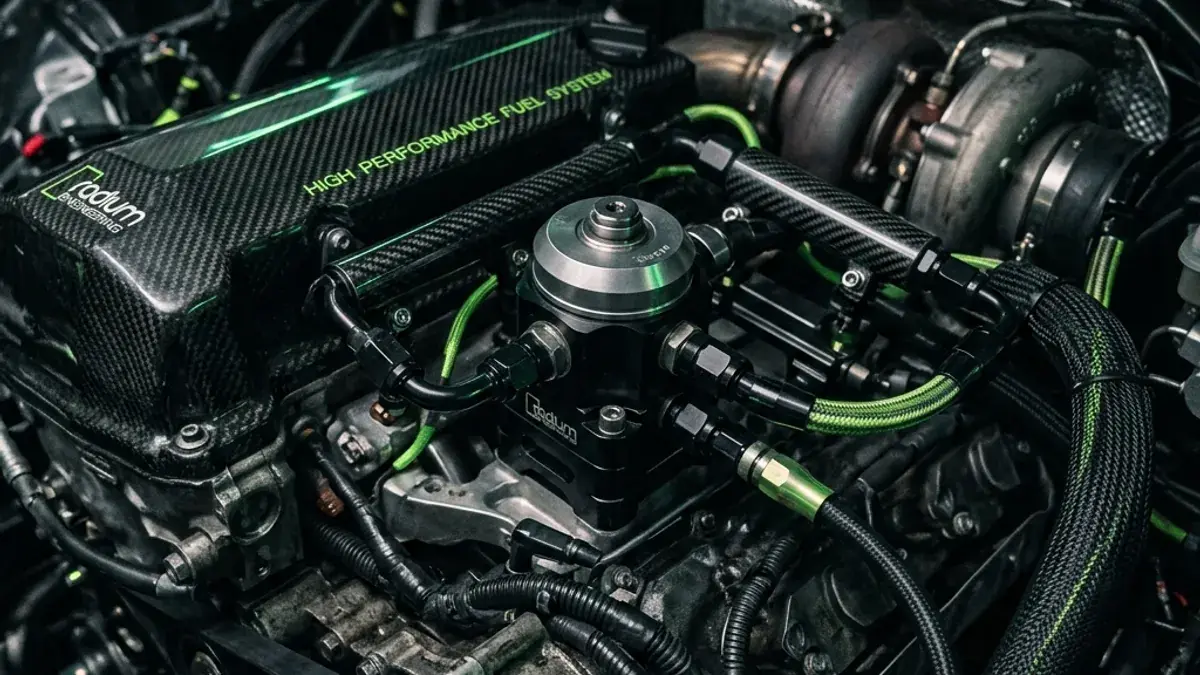
As power levels increase, your fuel system quickly becomes one of the most critical—and often overlooked—parts of the build.
At Mega 3 Performance, we see it all the time: customers chasing more boost and airflow, while the fuel system struggles to keep up. The result is limited performance at best—and serious engine risk at worst.
This isn’t a deep dive, but here are the key components you need to understand when upgrading your fuel system.
High-Pressure Fuel Pumps (HPFP)
On modern direct-injection engines, the high-pressure fuel pump is responsible for delivering fuel at extremely high pressures directly to the injectors.
As power increases, the factory HPFP can become a bottleneck. Upgrading or supplementing it allows for:
- Increased fuel delivery under load
- Better support for higher boost and airflow
- More stable fueling at high RPM
Low-Pressure Fuel Pumps (LPFP)
The low-pressure fuel pump supplies fuel from the tank to the high-pressure system.
If the LPFP can’t keep up, the entire system suffers. Upgrades here are often required before anything else, especially in higher horsepower builds.
Fuel Injectors: It’s About Fuel Mass, Not Just Size
Fuel injectors are often discussed in terms of “size,” but what really matters is fuel mass delivery.
Choosing the right injector involves:
- Target horsepower
- Fuel type (pump gas, ethanol, etc.)
- Duty cycle and headroom
Bigger isn’t always better—proper sizing ensures efficient atomization and consistent performance.
Surge Tanks: In-Tank vs. External
Fuel starvation becomes a real issue under hard acceleration, cornering, or low fuel levels.
That’s where surge tanks come in.
In-tank surge systems:
- Integrated into the factory tank
- Simpler and quieter
- Ideal for many street builds
External surge tanks:
- Separate reservoir system
- Greater fuel control under extreme conditions
- Common in high-horsepower or track-focused builds
Lift Pumps
A lift pump works alongside surge tank systems to ensure a constant supply of fuel to the main pumps.
They’re especially important in:
- Multi-pump setups
- External surge tank configurations
- High-demand fuel systems
Final Thoughts
Upgrading your fuel system isn’t about one component—it’s about building a system that can consistently deliver the fuel your engine demands.
This overview covers the basics, but the details matter. Fuel type, power goals, and vehicle platform all play a role in what setup is right for you.