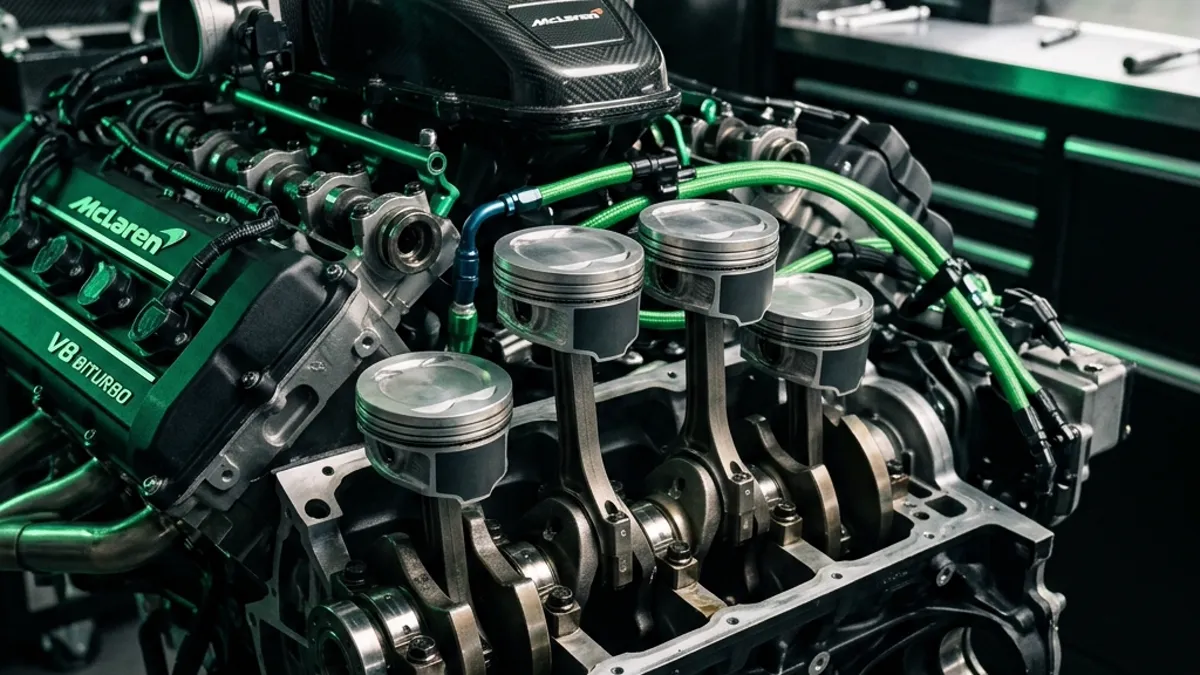
The McLaren 720S, 750S, and 765LT are some of the most capable tuning platforms on the market. With similar core powertrains, they respond extremely well to ECU and TCU calibration, bolt-ons, and turbo upgrades.
But like any high-performance engine, they do have limits.
At Mega 3 Performance, one of the most important things we emphasize is understanding where those limits are, and why they exist. Across these platforms, the primary mechanical limitation isn’t the turbos or the fuel system.
It’s the connecting rods.
A Shared Platform, Shared Limits
Although the 720S, 750S, and 765LT vary in factory power output and refinement, they are built on a very similar engine architecture.
- Similar internal component design
- Similar stress points under increased power
- Similar thresholds when pushing beyond factory performance levels
From a tuning perspective, these cars behave more alike than different, especially as power levels increase.
The Real Limiting Factor: Connecting Rods
The factory connecting rods are designed to handle impressive performance in stock form, but they were never intended for extreme, sustained high-power applications.
As power increases, so does:
- Cylinder pressure
- Combustion force
- Load on the rotating assembly
The connecting rods absorb a significant portion of that stress.
At moderate tuning levels, they perform well. But as builds move into higher horsepower ranges, the rods become the most common failure point when limits are exceeded.
Why This Matters for Tuning
This doesn’t mean you can’t safely tune these platforms, you absolutely can.
But it does mean tuning needs to be approached with:
- Realistic power goals
- Controlled boost and torque strategies
- An understanding of long-term reliability
Pushing for peak numbers without considering internal limits is where problems start.
Responsible Tuning vs. Chasing Numbers
There’s a growing trend in the performance world, chasing record-setting dyno numbers without regard for long-term reliability.
While those numbers may look impressive, they often come at a cost:
- Increased stress on factory internals
- Reduced engine lifespan
- Higher likelihood of catastrophic failure
At Mega 3 Performance, our philosophy is different. We focus on:
- Sustainable power levels
- Torque management to protect internal components
- Consistency over one-time peak results
A slightly more conservative, well-engineered tune will outperform an aggressive setup over time, not just in reliability, but in real-world usability.
Where Stock Internals Start to Reach Their Limit
While exact limits vary depending on conditions and use, the pattern is clear:
- Moderate tuning = well within safe range
- Aggressive tuning = approaching mechanical limits
- High horsepower builds = increased risk without internal upgrades
The key isn’t just how much power is made, but how that power is delivered and sustained.
When to Consider Engine Upgrades
If your goals include:
- Higher boost levels
- Upgraded turbochargers
- Maximum horsepower builds
It becomes important to consider upgrading internal components, especially connecting rods.
Stronger, forged rods provide the durability needed to handle increased cylinder pressures and sustained high-load conditions.
For customers pushing beyond stock limits, we also offer engine build solutions designed to support higher performance the right way.